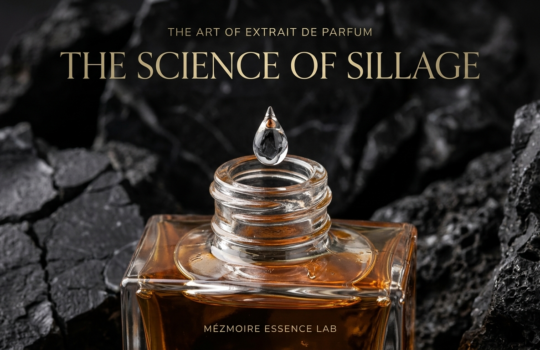
In the world of high fashion, an outfit is never truly complete without the final, invisible accessory: fragrance. To master the art of scent, one must look beyond the bottle and into the chemistry, architecture, and “performance physics” of the juice itself.
I. The Olfactory Pyramid: A Symphony in Three Acts
Every great fragrance is built like a musical composition, unfolding in layers known as “notes.” This structure determines the narrative of the scent on your skin.
- Top Notes (The Overture): The first impression. Ingredients like Bergamot, Lemon, and Mint are sparkling but volatile, evaporating within 15 to 30 minutes.
- Middle Notes (The Heart): The true personality of the scent. Composed of Rose, Jasmine, or Spices, these emerge as the top notes fade and usually last 2 to 4 hours.
- Base Notes (The Soul): The foundation. Large molecules like Sandalwood, Vanilla, and Musk cling to the skin, providing the “dry-down” that lingers for the remainder of the day.
II. The Four Pillars of Performance
Understanding a fragrance requires looking at its “performance metrics.” While often confused, these four elements define how a scent interacts with the world.
1. Longevity (The Clock)
This is strictly about time. It measures how many hours the scent remains detectable on your skin.
- Pro Tip: Fragrance molecules bind to oils. For maximum longevity, apply unscented lotion before spraying.
2. Projection (The Bubble)
Projection is the distance a scent travels from your skin while you are standing still.
- The Visual: Imagine an invisible “scent bubble” surrounding you.
- The Impact: High projection (often called “beast mode”) means people can smell you from across a table. Low projection creates an intimate “skin scent.”
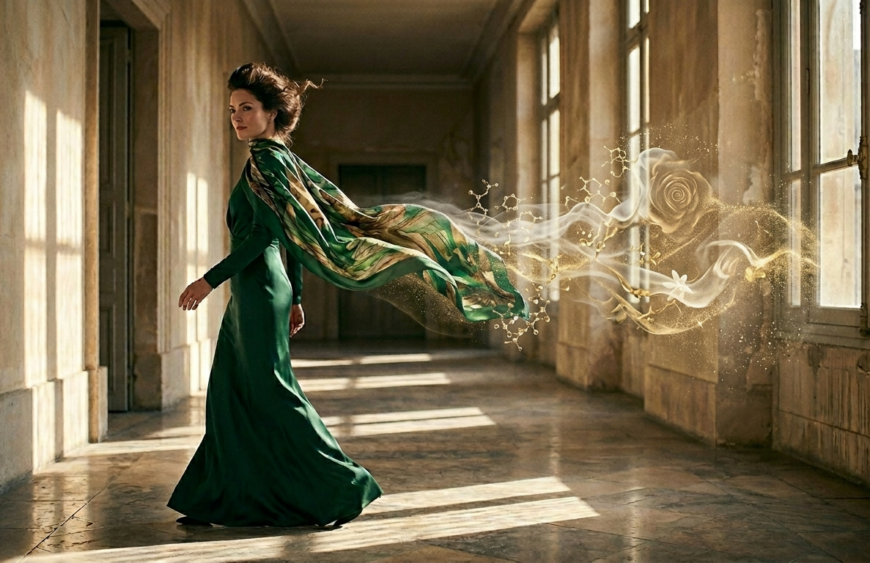
3. Sillage (The Wake)
Pronounced see-yazh, this is the trail left by a wearer in motion.
- The Visual: Like the ripples left by a boat or the vapor trail of a jet.
- The Impact: High sillage means your fragrance remains in a room or an elevator for minutes after you have departed.
4. Concentration (The Strength)
The ratio of fragrance oil to alcohol determines the “intensity” label on the bottle:
- Eau de Toilette (EDT): 5-15% oil. High projection, moderate longevity.
- Eau de Parfum (EDP): 15-20% oil. Balanced projection and sillage.
- Parfum / Extrait: 20-40% oil. Intimate projection but extreme longevity and sillage.
III. The Rise of Affordable Luxury: MÉZMOIRE
For decades, the industry was split between mass-market Designer scents and hyper-expensive Niche bottles. However, a new movement is disrupting this binary.
Independent houses like MÉZMOIRE are pioneering “Affordable Luxury.” By focusing on the “juice” rather than expensive celebrity marketing or “prestige markups,” these small businesses offer the same complex notes and high oil concentrations (Extrait levels) for a fraction of the price.
This “Inspired” revolution ensures that high-performance sillage and niche-quality complexity are no longer gated by a high price tag, allowing everyone to own a luxury signature.
IV. The Connoisseur’s Commandments
- Don’t Rub: Rubbing wrists together creates friction heat that “crushes” delicate top notes.
- Pulse Points: Apply to the neck, wrists, and behind the ears where the body’s heat helps the scent project.
- Storage: Keep your bottles in a cool, dark place. Light and heat are the primary enemies of fragrance longevity.
Fragrance is the most intimate form of memory. Whether you choose a classic designer staple or an inspired masterpiece from a house like MÉZMOIRE, the goal is to find a scent that speaks when you are silent.
Quick Reference: Fragrance Families & Notes
1. The Fresh Family
- Sub-groups: Citrus, Water, Green.
- Key Notes: Grapefruit, Sea Salt, Cut Grass.
- Best For: Office, Gym, Summer mornings.
2. The Floral Family
- Sub-groups: Fruity, Floral, Soft Floral (Powdery).
- Key Notes: Peony, Iris, Peach.
- Best For: Weddings, Brunches, Springtime.
3. The Woody Family
- Sub-groups: Woods, Mossy Woods, Dry Woods.
- Key Notes: Cedar, Vetiver, Patchouli.
- Best For: Professional settings, Autumn, Outdoor events.
4. The Amber (Oriental) Family
- Sub-groups: Woody Amber, Soft Amber.
- Key Notes: Cardamom, Incense, Tonka Bean.
- Best For: Date nights, Winter, Formal galas.